Restorative Dentistry · Sacramento, CA
Tooth Extractions in Sacramento, CA
We always try to save a natural tooth first — but when a tooth is too damaged or is crowding others, a careful extraction protects the rest of your mouth. Your comfort comes first at every step.
Before any extraction, we'll walk you through replacement options like implants and bridges so there are no surprises.
What Is a Tooth Extraction?
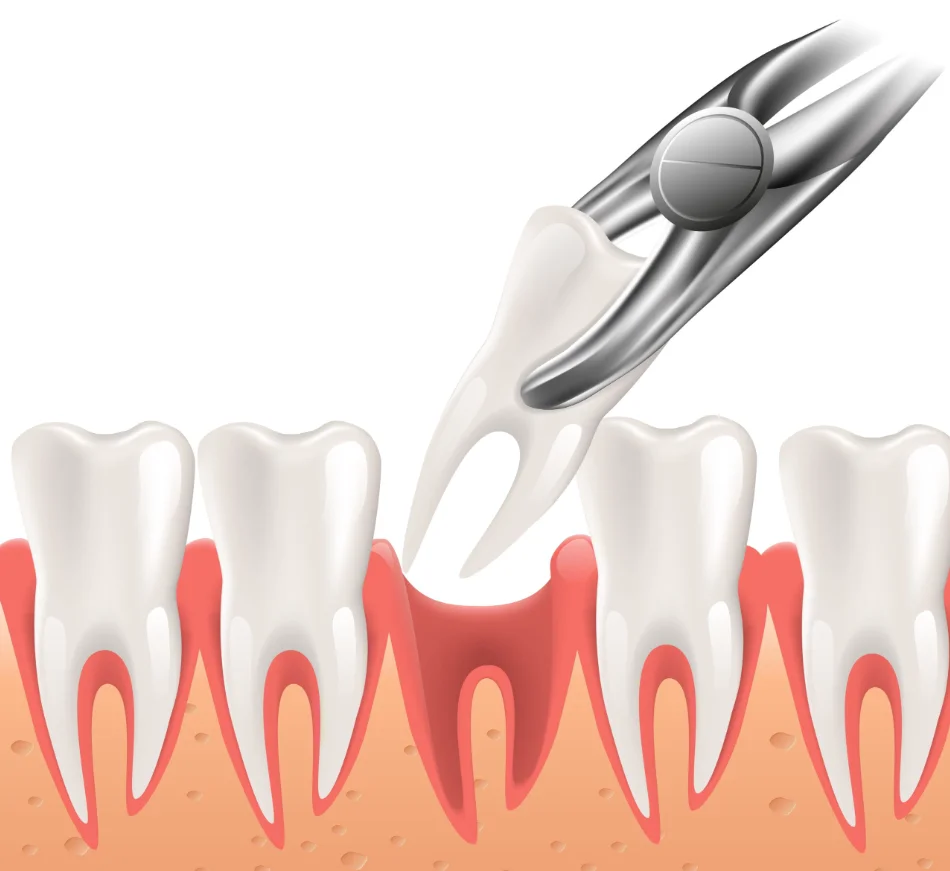
A tooth extraction is the careful removal of a tooth that can no longer be saved or that's causing problems for the rest of your mouth. At Fulton Family Dental, extraction is always the last resort — Dr. Bhumika Kathiriya, DDS will explore every tooth-saving option first, including root canal treatment, and give you an honest recommendation either way.
When a tooth does need to come out, the experience is far gentler than most patients expect. Modern anesthesia means you feel pressure but not pain, the removal itself is often surprisingly quick, and sedation options are available if anxiety is part of the picture for you.
Just as important as the extraction is what comes next. Before we remove any visible tooth, we'll walk you through replacement options — a single-tooth implant, a fixed bridge, or a partial denture — so a temporary gap never becomes a permanent problem for your bite.
When Does a Tooth Need to Be Removed?
Dr. Kathiriya recommends extraction only when keeping the tooth would do more harm than good:
- Decay or damage too extensive for a filling, crown, or root canal to repair
- A tooth cracked below the gumline where it can't be restored
- Advanced gum disease that has loosened the tooth beyond saving
- A wisdom tooth that's impacted, infected, or crowding neighboring teeth
- A stubborn infection causing ongoing pain or toothache that can't be resolved another way
- Severe crowding, sometimes as part of orthodontic treatment like Invisalign®
- Failing teeth being removed as part of a planned transition to dentures or implants
Why Sacramento Families Trust Us With Extractions
Gentle, Comfort-First Care
Thorough numbing, a calm pace, and constant check-ins — we never start until you're completely comfortable.
Sedation Options
If dental anxiety is real for you, sedation can make the entire visit feel easy and unhurried.
Same-Day Emergency Visits
A painful or infected tooth can't wait — we reserve time for <a href="/same-day-appointments/">same-day emergency appointments</a>.
Cone Beam 3D Planning
3D imaging maps the tooth's roots and surrounding anatomy before we begin, for a safer, more predictable procedure.
Tooth Removal: What to Expect
-
Exam & 3D Imaging
Low-radiation digital X-rays and cone beam 3D imaging show the tooth's roots, nerves, and bone — and confirm whether extraction truly is the best option.
-
Complete Numbing
The tooth and surrounding area are thoroughly anesthetized, with sedation available on request. You'll feel pressure during the procedure, but not pain.
-
Gentle Removal
Using careful, modern techniques, the tooth is loosened and removed with as little disturbance to the surrounding bone and gum as possible. Many extractions take only minutes.
-
Healing & Next Steps
You leave with clear written aftercare instructions and a plan for replacing the tooth if needed — including <a href="/bone-grafting/">bone grafting</a> at the time of extraction to preserve the site for a future implant.
Recovering After a Tooth Extraction
Most patients are back to normal routines within a day or two. The first 24–72 hours are about protecting the blood clot that forms in the socket — it's the foundation of healing, and dislodging it can cause a painful complication called dry socket. Mild soreness and swelling are normal early on and typically fade quickly with over-the-counter pain relievers and a cold compress.
Protect the healing site:
- Avoid straws, smoking, spitting, and vigorous rinsing for at least 72 hours — suction can dislodge the clot
- Stick to soft, cool foods for the first couple of days and chew on the opposite side
- After the first 24 hours, rinse gently with warm salt water a few times a day to keep the area clean
- Take medications as directed, and call us right away if pain worsens after day two or three instead of improving
Tooth Extraction Cost & Insurance in Sacramento
Extraction cost depends on the tooth and its complexity — a straightforward removal costs less than a surgical extraction of a broken or impacted tooth. Most dental insurance plans cover a portion of extractions, and we'll factor in the cost of any planned replacement so you can see the full picture, not just the first step.
At our Arden-Arcade office we verify your benefits before treatment and provide a clear written estimate, so there are never surprises. In pain now? Call (916) 929-3737 for a same-day emergency visit — we serve patients in English, Hindi, and Spanish.
Frequently Asked Questions
Does getting a tooth pulled hurt?
No — the area is completely numbed before we begin, so you'll feel pressure and movement but not pain. Patients are consistently surprised by how quick and uneventful the procedure is. If anxiety is the bigger hurdle, sedation can make the visit genuinely relaxed.
Do you remove wisdom teeth?
Yes — we evaluate and remove wisdom teeth, using cone beam 3D imaging to map each tooth's position and roots first. Deeply impacted teeth or complex cases near nerves may be referred to a trusted oral surgeon; we'll tell you honestly which situation yours is.
How long does it take to recover from an extraction?
Most soreness fades within two to three days, and many patients return to work or school the next day. The socket itself continues healing beneath the surface for several weeks. Following the aftercare instructions — especially avoiding straws and smoking early on — makes recovery smooth.
What is dry socket, and how do I avoid it?
Dry socket happens when the protective blood clot in the socket is dislodged too soon, exposing the bone underneath — it's uncomfortable but treatable. Avoid straws, smoking, spitting, and hard rinsing for the first 72 hours. If pain suddenly worsens a few days after your extraction, call us and we'll get you comfortable quickly.
Do I need to replace an extracted tooth?
For visible and chewing teeth, usually yes. A lingering gap lets neighboring teeth drift and the jawbone in that area shrink over time. A dental implant, bridge, or partial denture can fill the space — we'll compare the options honestly before your extraction, not after.
Can I get an implant at the same time as my extraction?
Sometimes, yes — in the right conditions, an implant can be placed the same day the tooth is removed. More often, we place a bone graft in the socket to preserve the site, then place the implant after a short healing period. Your 3D scan tells us which path fits your case.
I'm in severe pain — can you extract my tooth today?
Often, yes. We hold time for same-day emergencies, and if a tooth is beyond saving we can frequently numb, evaluate, and remove it in the same visit. Call (916) 929-3737 first thing and we'll get you in as soon as possible.
What can I eat after a tooth extraction?
For the first day or two, stick to soft, cool foods — yogurt, smoothies (no straw!), eggs, mashed potatoes, soup that isn't hot. Chew on the opposite side and add firmer foods back gradually as the site feels comfortable, usually within a few days.
More Restorative Dentistry Services
Comfort-First Care
Schedule a consultation and get honest guidance on your options.