Dental Implants · Sacramento, CA
Dental Bone Grafting in Sacramento, CA
A dental implant needs solid bone to anchor into. If your jawbone has thinned after tooth loss, a bone graft rebuilds that foundation so your implant can last a lifetime.
It's a routine, well-tolerated procedure — and often the key step that makes implants possible.
What Is Dental Bone Grafting?
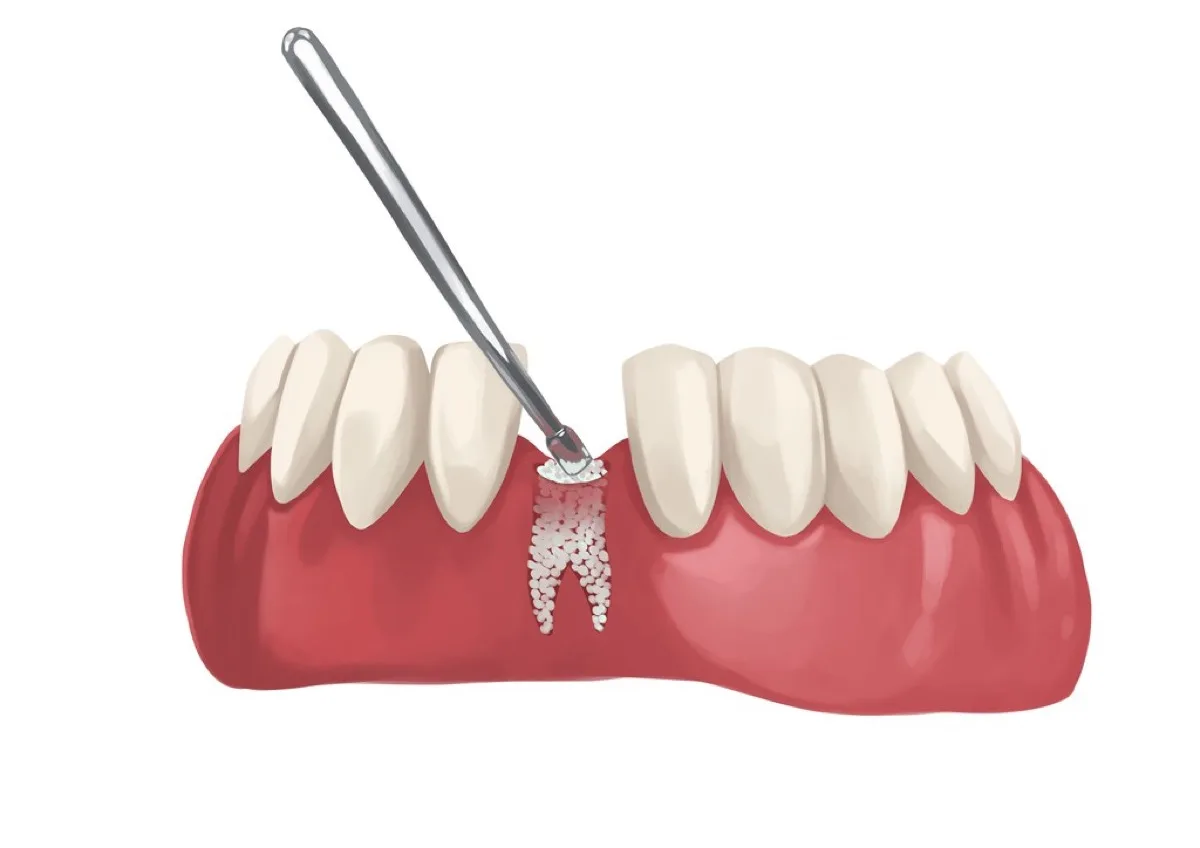
A dental bone graft is a routine procedure that rebuilds jawbone where it has thinned or worn away. Safe, biocompatible grafting material is placed in the area that needs reinforcement, and over the following months your body uses it as a scaffold — gradually replacing it with strong, natural bone of your own. It's one of the most common and well-tolerated procedures in implant dentistry.
Why does bone disappear in the first place? Your jawbone stays strong because tooth roots stimulate it every time you chew. When a tooth is lost, that stimulation stops and the bone beneath the gap begins to shrink — noticeably within the first year. Gum disease, injuries, and long-term denture wear accelerate the process. Left alone, jawbone loss can shift neighboring teeth, change facial contours, and rule out future implants.
At Fulton Family Dental, Dr. Bhumika Kathiriya, DDS uses cone beam 3D imaging to measure your bone precisely and place grafts exactly where they're needed. For most patients, grafting is the step that makes dental implants possible — whether you're planning a single tooth implant or a full-arch restoration.
When Is a Bone Graft Needed?
Dr. Kathiriya typically recommends bone grafting in these situations:
- Socket preservation — placing graft material immediately after a tooth extraction to prevent bone collapse and keep the site implant-ready
- Rebuilding bone in an area where a tooth has been missing for months or years
- A sinus lift — adding bone height in the upper back jaw, where the sinus sits close to the implant site
- Ridge augmentation — restoring the natural width and contour of a jaw ridge that has thinned
- Repairing bone damaged by advanced gum disease before restorative work
- Reinforcing the jaw after years of wearing traditional dentures
- Supporting larger restorations like implant bridges or implant-supported dentures
Why Sacramento Patients Trust Us with Bone Grafting
Cone Beam 3D Precision
Exact 3D measurements of your bone mean grafts are placed only where needed — no guesswork, no overtreatment.
Advanced Implant Training
Dr. Kathiriya is UCLA-trained and completed the Advanced Implant Dentistry Continuum at Loma Linda School of Dentistry, with 16+ years of experience.
Grafting & Implants Under One Roof
From socket preservation through final restoration, your entire implant journey happens in one familiar office.
Comfort & Sedation Options
Thorough numbing and sedation options keep grafting procedures calm and comfortable — most patients are surprised how easy it is.
Bone Grafting: What to Expect
-
Evaluation & 3D Imaging
A cone beam 3D scan measures the height, width, and density of your bone. We review the images with you, explain exactly what's needed and why, and provide a written estimate.
-
Graft Placement
After thorough numbing, the grafting material is placed and the site is protected while healing begins. Most grafts take under an hour, and many are done at the same visit as an extraction.
-
Healing & New Bone Growth
Over roughly three to six months, your body transforms the graft into solid natural bone. Minor grafts heal faster; sinus lifts and larger grafts take longer. We monitor progress along the way.
-
Ready for Your Implant
Once follow-up imaging confirms the bone is strong and mature, your site is ready. From here, implant placement proceeds on a solid foundation built to last.
Recovering from a Bone Graft
Recovery from a dental bone graft is usually easier than patients expect. Mild swelling and tenderness for a few days is normal and typically managed with over-the-counter medication and cold compresses. Most people return to work and normal routines within a day or two, while the deeper bone remodeling continues quietly over the following months.
Protect your graft while it heals:
- Stick to soft foods for the first several days and chew away from the graft site
- Don't smoke — smoking is the single biggest threat to graft success and healing
- Follow your post-op instructions for rinsing and cleaning, and keep the rest of your mouth healthy with gentle brushing and regular cleanings
- Attend every follow-up exam so we can confirm the new bone is maturing on schedule
Bone Graft Cost & Insurance in Sacramento
The cost of a dental bone graft depends on the type of graft — a small socket preservation after an extraction costs considerably less than a sinus lift or full ridge augmentation — as well as the material used and the size of the area treated. Because grafting protects the success of the implant that follows, it's best viewed as part of your overall implant investment rather than a separate expense.
Implant-related coverage varies widely from plan to plan, so at our Arden-Arcade office we verify your benefits first and give you a clear written estimate covering every step, from graft to final restoration. Flexible payment options are available, and our team can walk you through it all in English, Hindi, or Spanish. Call (916) 929-3737 to get started.
Frequently Asked Questions
Does a dental bone graft hurt?
The procedure itself is painless — the area is completely numbed before we begin, and sedation options are available if you're anxious. Afterward, most patients describe a few days of mild soreness, similar to recovering from a tooth extraction.
Where does the bone graft material come from?
Most grafts use carefully processed, sterilized bone material or synthetic bone substitutes — all rigorously safety-tested and used routinely in dentistry for decades. The graft acts as a scaffold that your own bone grows into and eventually replaces entirely. We'll explain the material recommended for your case at your consultation.
How long does a bone graft take to heal before an implant?
Most grafts mature in roughly three to six months, though small socket preservation grafts may be ready sooner and large sinus lifts can take longer. Follow-up cone beam imaging confirms the bone is solid before we schedule your implant placement.
What is socket preservation, and do I really need it?
Socket preservation is a small graft placed in the empty socket immediately after an extraction. It prevents the rapid bone collapse that follows tooth removal, keeping the site ready for a future implant. If there's any chance you'll want an implant later, it's a wise, inexpensive insurance policy.
I've been missing teeth for years — is it too late to rebuild the bone?
Rarely. Even long-standing jawbone loss can usually be rebuilt with grafting, though larger defects may need staged treatment. A cone beam 3D scan shows us exactly how much bone you have, and Dr. Kathiriya will lay out a realistic plan — including whether options like implant-supported dentures could work with less grafting.
Can I skip the bone graft and just get the implant?
Sometimes — if your bone is adequate, no graft is needed, and we'll tell you so. But placing an implant in insufficient bone risks early failure, which costs far more to fix than grafting up front. The 3D scan takes the guesswork out: you'll know exactly what your bone can support before deciding anything.
What is a sinus lift?
In the upper back jaw, the sinus cavity sits just above the tooth roots, and bone there is often too shallow for an implant after tooth loss. A sinus lift gently raises the sinus membrane and adds graft material beneath it, creating the bone height an implant needs. It's a well-established procedure we plan carefully with 3D imaging.
How do I find out if I need a bone graft?
Schedule an implant consultation at our Sacramento office. A cone beam 3D scan will show precisely how much bone you have, and we'll review the images together and map out your options with a written estimate. Book online or call (916) 929-3737.
More Dental Implants Services
Sinus Lift
Builds up bone beneath the sinus so upper-jaw implants have a solid foundation.
Learn MoreBuild A Strong Foundation
Book an implant consultation and we'll map out every step together.