Restorative Dentistry · Sacramento, CA
Tooth-Colored Fillings in Sacramento, CA
Cavities happen — and treating them shouldn't leave a mark on your smile. Our tooth-colored composite fillings restore decayed teeth with a durable material matched precisely to your natural enamel.
The result is a strong, comfortable repair that's virtually invisible when you talk, laugh, or smile.
What Are Tooth-Colored Fillings?
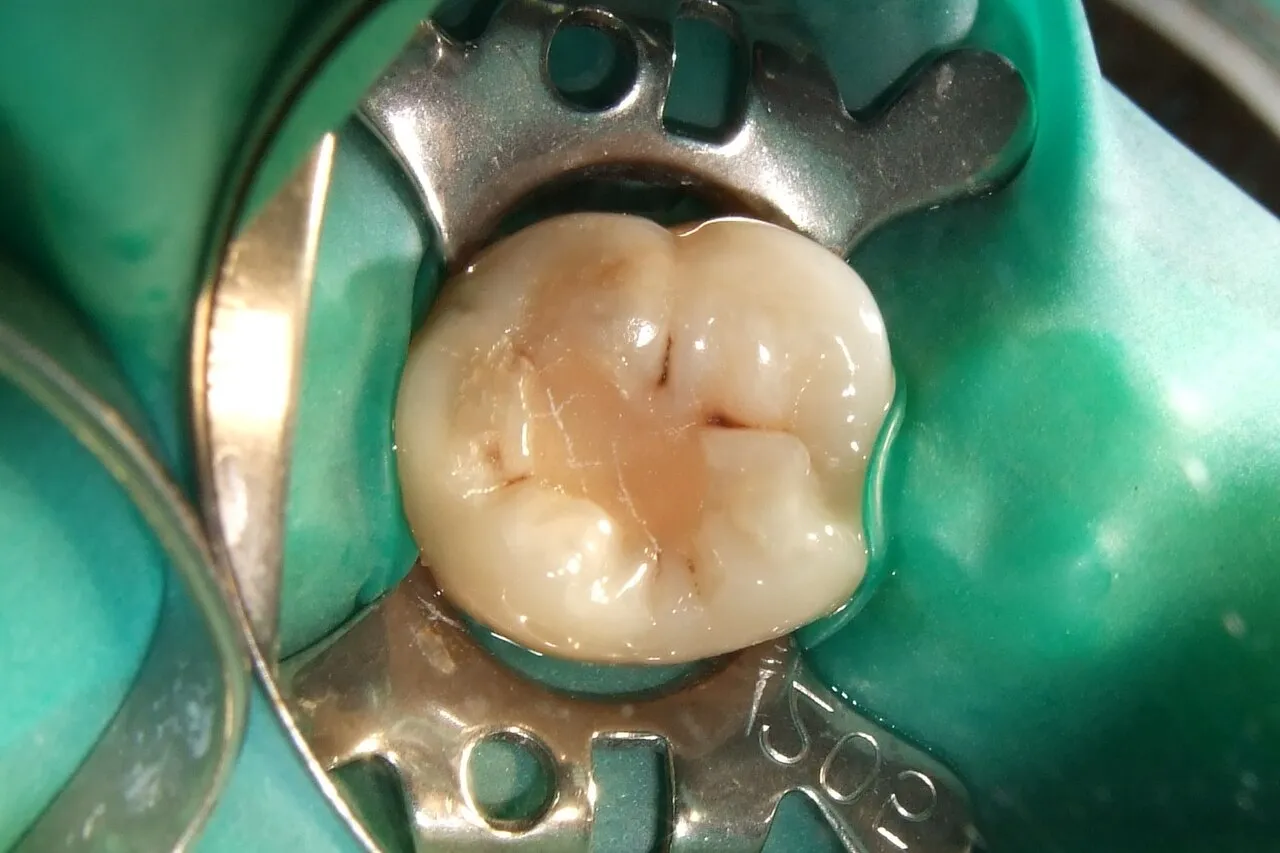
A tooth-colored filling — also called a composite or white filling — repairs a tooth after decay is removed. Instead of the dark metal fillings of years past, modern composite resin is shade-matched to your enamel and bonded directly to the tooth, so the repair is virtually invisible when you talk, laugh, or smile.
Because composite bonds to the tooth rather than just sitting inside it, we can be more conservative — removing only the decayed portion and preserving more of your healthy natural tooth. Composite fillings are also completely mercury-free, which is why many patients choose them when replacing older metal fillings.
At Fulton Family Dental, Dr. Bhumika Kathiriya, DDS uses low-radiation digital X-rays to catch cavities while they're still small. A small cavity means a small filling — and the best time to find one is at your regular dental exam, often before you feel anything at all.
When Do You Need a Filling?
Dr. Kathiriya recommends a filling when a tooth has a small-to-moderate area of damage that can be repaired while keeping the tooth strong:
- A cavity found during a checkup, even one you can't feel yet
- Sensitivity to sweets, cold, or hot in a specific tooth
- A visible dark spot, pit, or hole in a tooth
- A small chip or worn edge that traps food or feels rough
- An old metal or failing filling that is cracked, leaking, or discolored
- A tooth that catches floss or shreds it in the same spot
- Minor gaps or defects that can be repaired with cosmetic bonding techniques
Why Sacramento Families Choose Us for Fillings
Invisible Shade Matching
Every filling is matched to the exact shade of your enamel, so the repair blends seamlessly with your smile.
Mercury-Free Materials
We use only tooth-colored, metal-free composite — a strong, safe, modern alternative to amalgam.
UCLA-Trained Dentist
Dr. Kathiriya brings advanced training and 16+ years of experience to even the smallest restoration.
Comfort-First Care
Thorough numbing, a gentle touch, and <a href="/sedation-dentistry/">sedation options</a> for anxious patients make visits easy.
Getting a Filling: What to Expect
-
Exam & Digital X-Rays
We confirm the size and depth of the cavity with low-radiation digital imaging and show you exactly what we see before recommending treatment.
-
Gentle Numbing & Decay Removal
After the area is thoroughly numbed, the decayed portion of the tooth is carefully removed — and only that portion, preserving healthy structure.
-
Layered Composite Placement
Shade-matched composite is placed in thin layers and hardened with a curing light, bonding directly to your tooth for a tight, durable seal.
-
Bite Check & Polish
We shape and polish the filling, then fine-tune your bite so the tooth feels completely natural. Most visits take under an hour.
How Long Do Composite Fillings Last?
With good home care, composite fillings commonly last seven to ten years, and many last well beyond that. The main threats to a filling's lifespan are new decay forming around its edges and heavy grinding forces — both of which are easy to manage with regular checkups and simple habits.
Make your fillings last:
- Brush twice a day with fluoride toothpaste and floss daily
- Ask about fluoride treatments to strengthen enamel around your fillings
- Avoid chewing ice, hard candy, and un-popped popcorn kernels
- Keep up with six-month exams and cleanings so small problems stay small
Cavity Filling Cost & Insurance in Sacramento
The cost of a filling depends on its size and how many surfaces of the tooth it covers. The good news: most PPO dental insurance plans cover fillings as a basic procedure — often around 70–80% after your deductible — making fillings one of the most affordable ways to stop decay before it turns into a bigger problem.
At our Arden-Arcade office we verify your benefits before treatment and give you a clear written estimate, so there are never surprises. No insurance? Call us at (916) 929-3737 and ask about flexible payment options when you book.
Frequently Asked Questions
Does getting a filling hurt?
No — the tooth is completely numbed before any work begins, and most patients feel nothing more than gentle pressure. If dental visits make you nervous, ask about our sedation options when you schedule.
How long does a filling appointment take?
Most single fillings take 30–60 minutes from start to finish. If you have more than one cavity, we can often treat several in the same visit to save you trips.
Are tooth-colored fillings as strong as metal fillings?
Modern composite is a durable, proven material that handles normal chewing forces very well. Because it bonds to the tooth, it can also reinforce the remaining structure — something metal fillings don't do. For very large areas of damage, a crown may be the stronger choice, and we'll explain both options honestly.
Should I replace my old silver (amalgam) fillings?
Not automatically. If an old metal filling is intact and sealing well, it can often stay. But if it's cracked, leaking, or has decay underneath, we'll recommend replacing it — usually with mercury-free composite that looks and feels far more natural.
Can I eat after getting a filling?
Composite fillings are fully hardened by the curing light before you leave, so you can eat as soon as the numbness wears off — usually within a few hours. Just be careful not to bite your cheek or tongue while you're still numb.
What happens if a cavity is too deep for a filling?
If decay reaches the nerve inside the tooth, a filling alone can't solve the problem — the tooth may need root canal treatment followed by a crown. That's exactly why we encourage treating cavities early, while a simple filling is still enough.
Is it normal for a tooth to be sensitive after a filling?
Mild sensitivity to cold or pressure for a few days is common and fades on its own. If sensitivity is sharp, worsening, or lasts more than a couple of weeks, give us a call — a quick bite adjustment usually solves it.
More Restorative Dentistry Services
Treat Cavities Seamlessly
Schedule your visit and restore your tooth without a trace.